Showing posts with label History. Show all posts

Friday, January 23, 2015

Astronomy- A Historical Saga: Part 4

4

Einstein: Who Shaped the Modern Physics
Welcome to the age, where science rules every sphere of life- Modern age. This age started in early 20th century. Between Newton and Einstein, there had been no important researches on astronomy, which can be highlighted. So, from the period Newton’s death to Einstein’s birth (1727-1879), astronomy-science was in hibernation.
Albert Einstein; we all honor him as one of the greatest scientists of time. He was devoted to Newton’s laws. But there was something wrong! Newton’s concept is at average works everywhere, but it can’t explain some particular incidents specifically. Scientific method was developed in late 19th century. According to this new method, a theory that fails to explain a specific incident; is thrown to trash. So, Newton’s researches were trashed in order to establish another revolution- The Einstein-revolution; A controversy of ages.
Einstein reached a new decision- the relativity. It’s a theory, which supports almost no constants. Everything is variable according to it. Einstein himself became an epic legend!
Einstein declined the theory of gravity. He thought of a universal structure, where space-time itself, is geodesic. He assembled all the space, time, mass and physical motions in a single theory. There is no absolute space, or absolute time. Universe is neither infinite nor limited. There is nothing beyond its volume.
Equation that changed our view forever.
. It’s Einstein’s most famous creation which shows that, energy and mass is in fact, the same. One is transformable to another.
In 1910 and 20s, Einstein published his researches, including the both parts of the relativity theory- General theory of Relativity and Special theory of relativity. Einstein achieved Noble prize in physics in 1921 for his research on law of photoelectric effect.
Einstein’s concept required a new kind of view. There also required a new type of geometry, where the summation of tree angle of a triangle is not equal to zero!
According to Einstein’s concept, mass bends space-time, and even, it slows down the speed of light! Parallels meet at a point. And even, many postulates and corollaries of Euclidian geometry are declined by this geodesic mathematical system. Universe is not flat as Newton thought. But it is more complex in structure that, no scientists had thought about it ever before Einstein.
Relativity: Mass bends Space-time Fabric
Einstein’s theory successfully explained the fluctuation of the orbits of the planets and their moons. The tip of Mercury often fluctuates. The following theory also explained that.
Einstein’s universe is expanding. But once, he did a big mistake. He couldn’t believe that universe can expand. He was influenced by the traditional constant-universe concept and created a constant. It is called Einstein’s gravitational constant. This didn’t support his theory. Later, when Edwin P Hubble observed the space and found that the universe is open and expanding; Einstein declared his constant as the greatest mistake of his life.
Einstein and his works are hard to describe in words. There are many funny stories about him in public. This great scientist died on 1955.

Astronomy- A Historical Saga: Part 3.3.5

3.5
Sir Isaac Newton
The Catholics won seemingly, by ending the ‘Galileo’ chapter. But actually, science was going to win. The Copernican revolution was about to fulfill. There was much evidence for the sun-centered world-model. But there was a gap somewhere! Yes, we’re talking about the force, for which satellites move around their mother planets, and the planets move around their mother stars. And this is where a new legend comes by turn- Isaac Newton.
He was born at the end of the same year when Galileo died, in a village called Willsthorp in England.
Gravity- if something goes up, it comes back down. A theory that made a revolution! Isaac Newton explained everything in terms of gravity. Therefore, Newton is considered as one of the greatest scientists of all time.
Newton was an amazing person. Aldus Huxly said- “He was futile as a human, but was superior as a monster.” This quote proves how strange and interesting fellow Newton was. A theory which was beyond the imagination of Kepler and Galileo, Newton shaped it in mathematical terms.
Aristotle divided the world in two regions- first one is the polluted region under the moon, and other is the holy (!) region at the other side of the moon. Newton canceled this division, and established the base of ‘The Copernican Universe System’.
Newton’s theory and laws are so easy to understand that even today; we count them as the basis of physics. Though, the modern basis of physics is created by Albert Einstein, but very few people understand it.
Gravitational theory, Laws of motion, Laws of conservation of momentum etc- we all know about these. Newton’s laws still works today while a car running on the road, or a lawn-roller is pushed or pulled, or marbles hits one another etc.
Newton was very talented. He invented Calculus when he was 23 or 25, while he was a student of Cambridge University. He became world’s one of the greatest mathematician in that age!
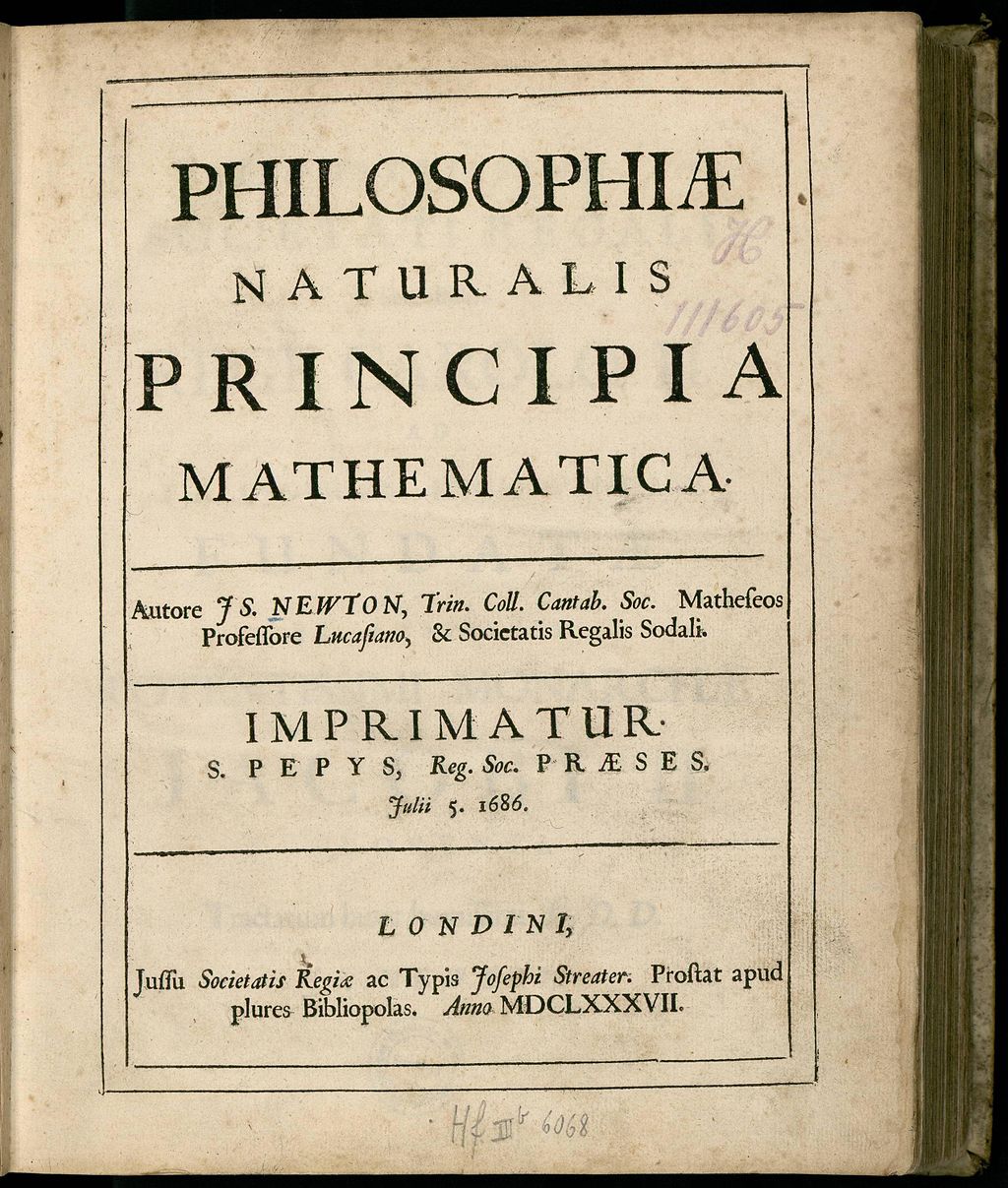
Philosphia Naturalis Principia Mathematica
Newton was aversion to publicity. He kept inventing amazing things and kept those writing in his handbook. He averted from publishing those researches. At the age of 41, he started to write a book in request of his friend- Edmund Halley. It was his greatest creation- Philosphia Naturalis Principia Mathematica. This book was published in 1687.
In 1666, plague broke out and Newton went to his village, leaving Cambridge. It is said that- one day he was sitting under a tree and saw an apple falling from a branch. He questioned himself- the force which made the apple fall, isn’t it also pulling the moon? Thus, gravity was discovered; a force that keeps everything attracting towards each other, and vice-versa. Everything in cosmos attracts each other. . And also, gravitation is that force which makes everything move in the universe.
In 1727, Newton died. Our solar system was almost discovered. But that’s not the point. Newton’s laws work everywhere in the galaxy. Even today, all physical incidents are explained by those terms.

Friday, August 29, 2014

Astronomy- A Historical Saga: Part 3.3.4

3.4
Galileo Galilee


This is a story of religious blindness versus scientific truth. History is very rude, reality is hard. Though, sometimes time gives birth to some great humans who leaves their footprint on the planet forever. Galileo is one of those.
In need of time, Galileo Galilee was born in February 15, 1564 in Italy, just a day later Valentine. He is the great astronomer who constructed the base of modern science. His contribution to science is unforgettable. He born before Kepler and also lived after Kepler.
Cover:
Dialogo sopra i due massimi sistemi
He shocked the world very hardly which affected the system so deeply which we still feel today. Galileo is a name of revolution, an icon of modern astronomy. It is said that, Galileo dropped a light and a heavy object together from the Pisa’s temple and showed that different masses fall with same acceleration. He innovated the scientific method of modern research.
He fought against the religious blindness all his life. Galileo’s parents wanted him to study medical science. But medical-study never attracted his curious mind because, yet medical was taught according to Galen’s book which was 1500 years old method. And though, Catholics did not allow any kind of dissection. That’s why Galileo left medical study and started studying mathematics and inventing small things by himself.

At the age of 25 he was employed as a lecturer of mathematics in Pisa where he taught astronomy, poetry and mathematics. After some years he had to leave that post too and got a new post in Padua University in Venice. Giordano Bruno was another candidate of same post. It was 1592 when Galileo came to Padua.
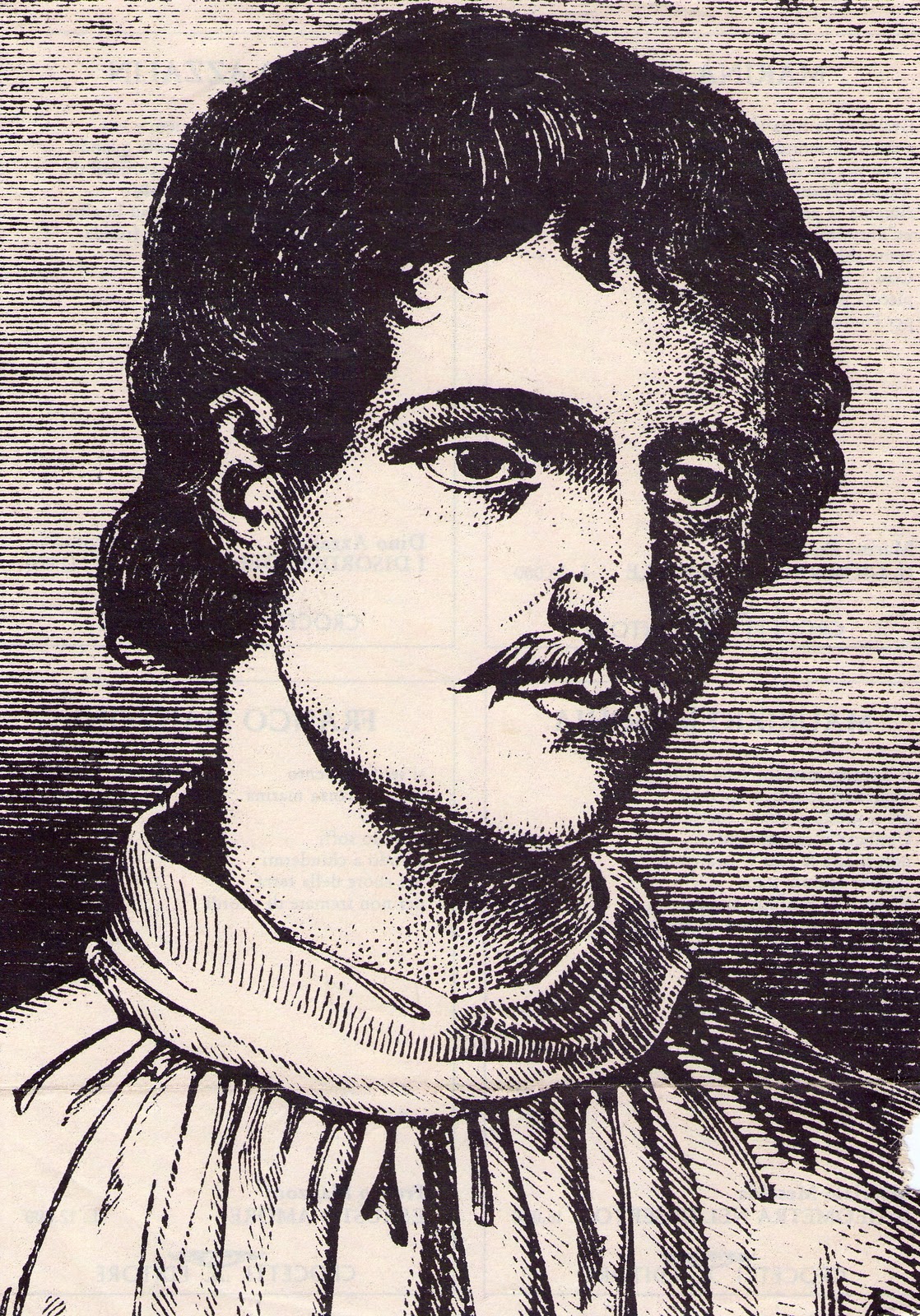
Giordano Bruno
Galileo was in Padua for 18 years. In that period he wrote, lectured, experimented, invented scientific instruments included thermometer. He had suffered a lot for family issues such as his two sisters’ marriage; he had to pay a big amount of dowry. He also had given some money to his brother who was a singer.
At the age of 45 he became famous as a scientist. In 1609, Galileo came to know that a man in Holland made an instrument with glass, through which things can be seen magnified. At once, he collected some lenses and made his very own telescope, an instrument which unlocked a new era of astronomy. Galileo is the first human ever been who saw more far in the sky than ever before. He observed the sky and recorded what he seen. 1609 and 1610, in this two years he discovered so many things in the sky.
Galileo observed our satellite Moon and its nature, Mars and its satellites’ nature. He discovered the 4 satellites of Jupiter out of its 16 satellites. He differentiated between Planets and their moon or satellites. The breakdown of old doctrines about astronomy occurred, when Galileo saw that all the planets he discovered are moving around the sun and all the moons are moving around their mother planets. He came to decision that, our earth is not beyond this nature. In a moment, all the theories of Aristotle and related earth-centered universe concepts started to fall apart. Galileo also observed the phases of Moon and Venus. It became clear that, Venus also moves around the sun.
In 1610, Galileo published his book Sidereus Nuncius where he included all his observations. This book made him more famous. In 1611, Galileo went to Rome and lectured and made many fans and foes. Galileo continued his research against all odds. He discovered solar-spot on sun’s surface. In 1613, he published another book on this ‘solar-spot’ matter.
Cover: Sidereus Nuncius
The war between blind religions and liberal science started in 1616. Galileo liked debating which is awful for religions. In 1624, Galileo started to write a book on Copernican concept in which he wanted to highlight that Copernicus was right. After getting permission of religious authority, the book was at last published in 1632. The name of this epic book is Dialogo sopra i due massimi sistemi, in English it’s called- Dialogue Concerning the Two Chief World Systems.
After releasing the book, Catholics called Galileo in Rome. Galileo admitted his guilt (!). The authority that burnt Bruno alive sentenced Galileo imprisonment for life. He wasn’t put in jail; rather he was imprisoned in his own house in Florence. He never left research, though. He wrote another book in prison- Two New Sciences. Before becoming blind in 1637, he kept researching. His daughter Merry Celeste read expiatory verses seven times every day. After becoming blind Galileo said- “The universe, which I made a million times bigger, today, it became as small as my body.”


The great scientist who trigged a new era of science, who wanted every human scientific-minded, who gave birth to a new scientific doctrine, died in January 8, 1642.

Astronomy- A Historical Saga: Part 3.3.3

3.3
Johannes Kepler
Italian astronomer Copernicus, Danish astronomer Tycho and after that, comes German astronomer Kepler; All in Europe. This is why; Europe is called the gateway to universal knowledge. Even today, Europe is known as the paradise of knowledge to the learners.
In December 27, 1571 in some corner of south-west Germany, a new age scientist was born in a poor family whose name was Johannes Kepler, a genius who changed the mankind paradigm. His contribution is counted as a very important part of astronomy.
Kepler’s family life was full of sorrows. He was born with poor health. His father was an on-rent-soldier. He was lost when Kepler was young, some say, his father died. His mother was a rude lady and thus, she was insulted by the society and even once, his mother was accused of being a wicked witch. Kepler freed his mother from this blind religious view.
Kepler’s education life was not so good enough, as he was poor. But he was talented and studied against all odds. This struggling hero wanted to become a priest but became an astronomer by accident. Kepler was a teacher in some school of Grudge, Austria. He was not a good teacher as he was as a student.
When he became priest, he was told to make a calendar which can predict the future about climate, politics etc in astrological method. Kepler was lucky (!) as his major astrological predictions about climate became true in 1595 and thus, he became famous as an astrologer. Point to be noticed that in his age, astronomy and astrology were not differentiated.
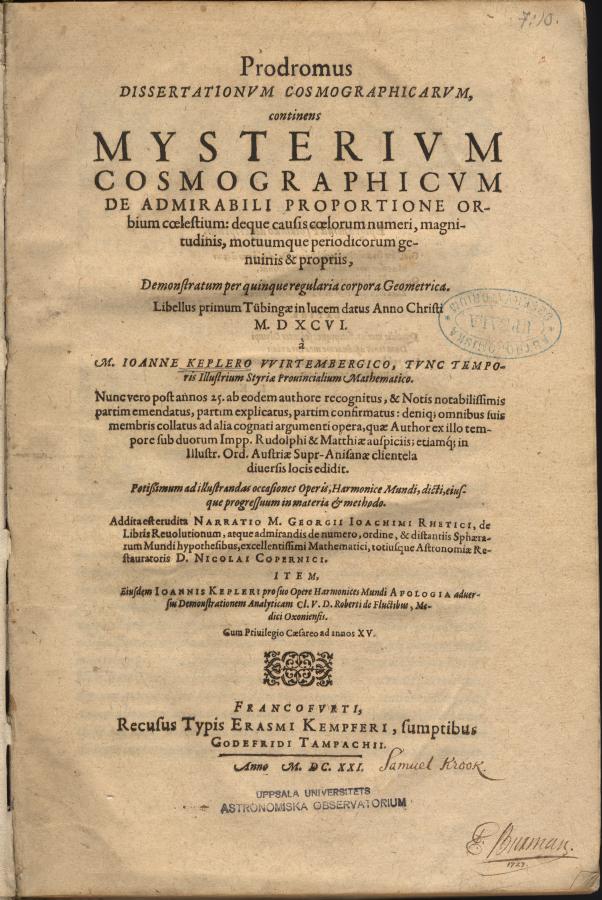
Once, Kepler was explaining his students about the transit of Jupiter and Saturn. To explain it to them, he drew a complex geometrical image on the board. He made a theorem- the “Kepler’s Theorem”. The Revolutionibus of Copernicus attracted him, because the sun-centered model gave him a divine (!) feeling. Researching on that book, Kepler published his first book, Mysterium Cosmographicum, in English- The Mystery of Cosmos. In today’s scale, the book had nothing special. Kepler sent the book to Tycho and Galileo. They admitted the talent of Kepler, though he had not that intellect that he needed to be an astronomer. One accident changed his identity from a famous astrologer to a famous astronomer. In his book he suggested that there are five perfect geometrical shapes in the structure of the universe- Cube, Quadrahedron, Icosahedron, Octahedron and Dodecahedron.
CoverMysterium Cosmographicum
In 1601, Tycho died and Kepler was replaced in his post. Tycho’s death was an accident which gave Kepler the opportunity to become a royal mathematician. Tycho’s observation and research came to his hand. The Rudolfin Table was modified by him. He also analyzed the motion of planets. As he believed in Copernican concept, Tycho’s parents cased on him and refused him to use Tycho’s instruments for research. Kepler handed over Tycho’s instruments to his family but kept his books. Kepler monitored the motion of Jupiter for 4 years. In 1606, he revealed the mystery of Jupiter’s orbit. He found that, the orbit is elliptical. It was a ground-breaking discovery in that age. Kepler bade goodbye to two old concepts- one, circular motion of planets; two, regular motion of planets.
Kepler saw that, the orbit of planet was elliptical and at a focus point was the star, the sun. Near the focus, planet moves fast. On the other hand, far from the focus, planet moves slow. This incident cancelled the concept of circular regular motion of planets.
In 1609, Kepler published his concept in his book Astronomia Nova, in English- The New Astronomy. In this book Kepler tried to give concept of an invisible energy that holds the planets on their orbit. This concept can be referred to the concept of gravity.
A glance of Harmonices Mundi

Cover: Astronomia Nova
In 1604, before publishing the book a supernova was seen in the sky which was named after Kepler as Kepler’s Supernova. Kepler included this incident in his third book Harmonices Mundi which was published in 1619. Actually, this book was the second part of his first book, Mysterium Cosmograhicum. In the book, Kepler showed the relation between the radius of planetary orbit and their elliptic period. Kepler’s formulas describe the phenomena, but can’t explain it. He made these formulas basing on Tycho’s research but didn't know the reason of the phenomena. This is why; Kepler’s formulas can’t be counted as a theory.
He modified and corrected the Rudolfin Table, published it in 1628 and dedicated it to Tycho. This table was a great contribution of Kepler which shows that Copernican sun-based universe model is accurate. Copernicus might have wanted this kind of table as a proof of his concept.

Kepler died on November 15, 1630. He was lucky as he did not face any religious tortures as he lived in Europe. Point to be noticed that, church had no power in Europe that time.

Astronomy- A Historical Saga: Part 3.3.2

3.2
Tycho Brahe
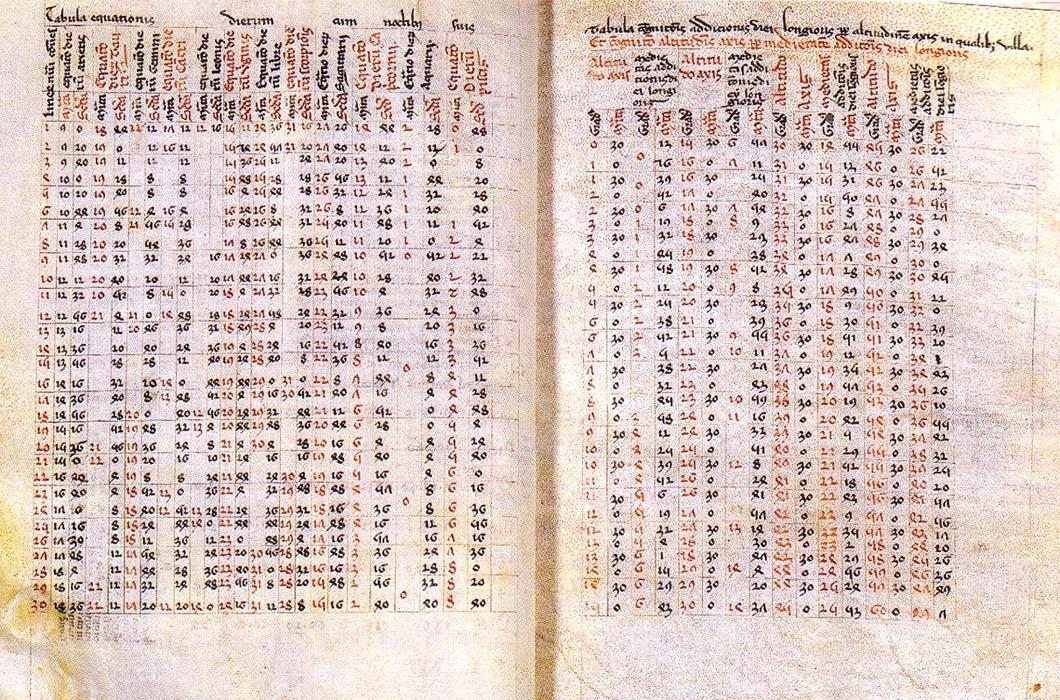
Alfonsin/Rudolfin Table

After Copernicus, thus comes Tycho Brahe- a scientist born in a royal family. His biography is amazing and full of wonders. But that is not the fact here. The main fact here is his contribution for astronomy. We will try to describe his contribution as briefly as we can.
August 24, 1563; Tycho was observing the sky. He discovered the transit of Saturn and Jupiter. Alfonsin Table and Prutenic Table- the very popular journal of that time were analyzed by Tycho and he found that, both of the journals predicted wrong about the incident. In November 1572, a new star was noticed by Tycho in the Cassiopeia constellation. It is called the ‘Tycho’s supernova’. Tycho observed that supernova from different places of Europe but found no parallax of that star. He came to decision that, it is a new star and way too far from here, very far in the sky. Tycho wrote a book on it named as The Stella Nova.
Danish king Fredrick the second became very glad at Tycho for his research. King gave him a lot of money and wealth and gave the power of Hovin Island on Tycho. In patron of the king, Tycho established an observatory on that island. Tycho’s observatory became an astronomical research lab to the world of that time. Tycho did great, but he also did a huge mistake. He thought that earth cannot move. So, he denied Copernican concept and the concept of Ptolemy also. Thus, Tycho made a new model of the universe where the earth is the center of everything and the sun and the moon moves around it and the other planets moves around the sun.
Tychonian System
Tycho had a great talent of observing. There was no telescope that time. But his works are really incredible. In 1588 king second Fredrick died and his son ascended the thrones as his heir. Tycho and the new king had an enmity and Tycho left the observatory with what he had. He moves in to the capital of Bohemia, Prague. He took the post of royal-mathematician of king second Rudolf. He was given the job to correct the Alfonsin Table and it had to be named after the king as Rudolfin Table. Tycho wanted to make the table according to his model instead of Ptolemy’s model as he wanted to prove his model as correct. He employed some mathematicians and astronomers as his assistants. One of them was Johannes Kapler.
In a night of November 1601, Tycho became sick of over-eating in a royal feast. After nine days, he died. But before death, he requested the king to employ Kapler in his post. According to Tycho’s last will, Kapler, who was from a poor family, got the post where Tycho was. Kapler developed a new kind of astronomy basing on Tycho’s observation.
After Tycho, Kapler came and made another revolution in astronomy. He made a sun-centered model again. But he used some unique geometric shapes in his model. Thus, his model became more error-free than ever before. He extended the concept of the universe and made a revolution in the mass view about astrophysics.

Thursday, August 14, 2014

Astronomy- A Historical Saga: Part 3.3.1

3.1
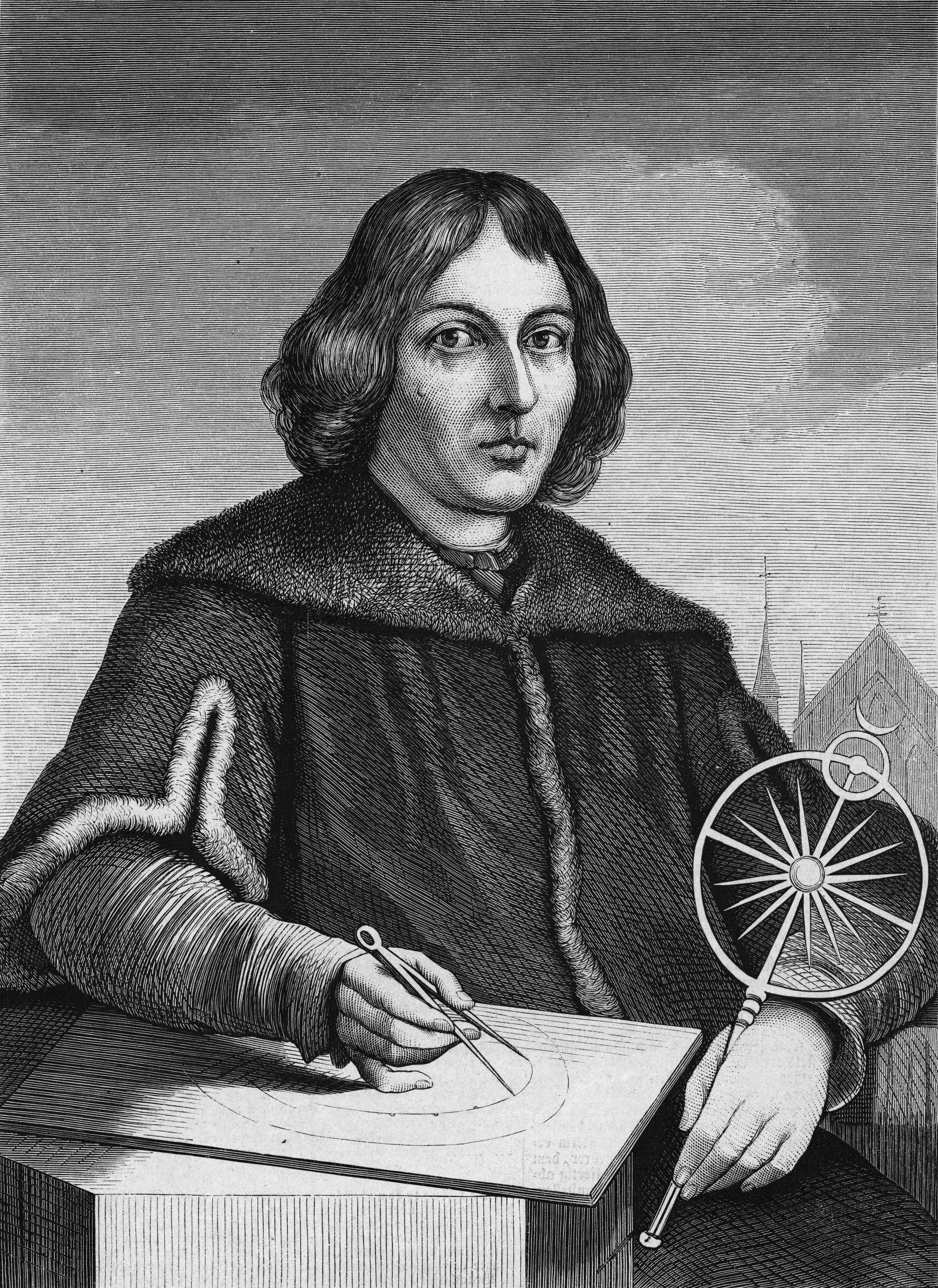
Nicolas Copernicus
After the religious rage of middle age, science again started to rise up. In 1473 AD, the light of science was again brought by an unforgettable legend- Nicolas Copernicus. He first suggested the modern concept of ‘The Universe’. He is known as the father of sun-centered universe model. He brought a scientific revolution called the ‘Copernican Revolution’. He started this revolution which was later lead by Tyco Brahe, Kepler, Galileo Galilee and Newton. This five great legend has changed the view of mankind towards science. People started playing with science instead of hating it.
The controversial earth-centered model of Ptolemy was totally cancelled. The concept of ‘Scientific Process’ had born. In this new concept of the universe- sun was in the center and everything else moves around it. This is how; Copernicus replaced the place of ancient astronomer, Aristarchus. He just accepted and established the concept of Aristarchus, and sowed the seed of modern astronomy.
Just in age of 24, Copernicus became a distinctive astronomer. He observed that, the ‘Aldebron’ star is hiding behind the moon. Using self-invented devices he observed the sun. He projected the sunlight on the wall and discovered some important information on it. Thus, he became sure that, the concept of Ptolemy is wrong. At the age of 31, Copernicus observed something more interesting. He saw the moon and five other known planets of that time in the summer solstice. This observation not only showed the error of the Ptolemy model, but also clarified that Ptolemy’s prediction was also wrong. Copernicus kept observing the sky. No doubts left that, Ptolemy was wrong. Ptolemy’s concept was thrown to the trash. And another shocking matter about this observation is that, it opened a new door of possibilities for astronomy. Copernicus had to bring a brand new concept of universe- the center-less universe. So he also had to throw off Aristarchus’s earth-centered universe concept.
In 1512, Copernicus wrote an essay which he titled- ‘The Play of The Planets’. In the new universal structure Copernicus showed- the sun is the center of the solar system and the planets moves around it; and the stars are too far away to imagine. Copernicus was an astronomer between middle age and modern age. In one hand, the middle age wasn't ended yet and in other hand, science was at stake. So it was very critical situation for Copernicus to publish his essay as it might hurt people’s religious view. It could be a hazard for middle age. Copernicus was European, and in Europe, Christianity was ruling in full power at that time. Saints killed those on fire who got deviated from the Bible. So, Copernicus kept himself away from publishing that essay.
After many years, two astronomer of Hittenberg University found that essay of Copernicus. They were- Reticus and Reinhold. Copernicus was very old then, Reticus met him. Copernicus showed him the greatest creation of his life- The Revolutionibus. The book, in which, all the results of all the research of his life were written. Reticus requested him to publish it as a book.
Cover: The Revolutionibus
After many difficulties, in April 1543, the book was published. Copernicus was bedfast as he was suffering from heart-disease. That year in June, Copernicus died. But some days before he died, he was given the book. He couldn’t read it. The title of the book was also changed. From The Revolutionibus it became- The Revolutionibus Orbium Quelestium. In the starting of that book, there was an unsigned preface in which it was written that- all the determinations and research included in this book is just a project and may not be true as astronomy can’t assure anything.
This preface wasn't written by Copernicus and he also didn't even know that this kind of preface will be included in his book. The preface cancelled the concept suggested by Copernicus. This incident makes us realize the darkness of religion. A saint named Andrew Osiander wrote that preface. He had a positive motive behind this. Because he knew that if he didn't do it, the book wouldn't be published.
The main five valuable points about the book are just like this- firstly, the earth is the center of the solar system and other planets moves around it. Secondly, the ‘so-called’ sphere of stars is way too far to imagine. This sphere is even very far than the distance between the earth and the sun. Thirdly, the objects which are seem moving in the sky because of the diurnal motion of the earth. Fourthly, the sun apparently seems moving around us, is because of earth’s annual motion. Fifthly, often it seems to us that some planets are moving in reverse. Actually it happens because of their retrograde motion.
Christian Protestants criticized Copernicus for his great contribution. To us it’s valuable, but to the saints it in nothing but zero. Copernicus was lucky as he died within some months when the book was published. But later, another scientific mind named Giordano Bruno who sacrificed himself for astronomy. Bruno considered that the stars are just like our sun, far away from us and maybe there are planets moving around them too. He was killed by the Protestants as he was preaching the concept of Copernicus among people. They burnt him alive. 
What was the crime of Bruno? - Science has never asked this question to the church. Science never had and never has any serious purpose to hurt religions, and never will be. Then why religion always tortures and criticizes science? May be, no one know the answers. Today, Catholic Church begged pardon from us. But nothing comes or goes with their apology. What happened in past, is past. Science doesn't regret past.

Astronomy- A Historical Saga: Part 2

In pre-Christ age, people believed and admitted that- the earth is still and center of the universe and everything else move around it. About all scientists, philosophers and great-minds of that age approved it as truth. But one extra-ordinary scientist named Aristarchus first suggested that, not the earth, but the sun is the center of the universe and everything else move around it. But people of that time was too much influenced by Aristotle’s ideology that, they denied Aristarchus’s concept. As Aristotle was very popular, Aristarchus and his theory were destroyed by the cruel justice of time.
Aristarchus' Model of the Solar System

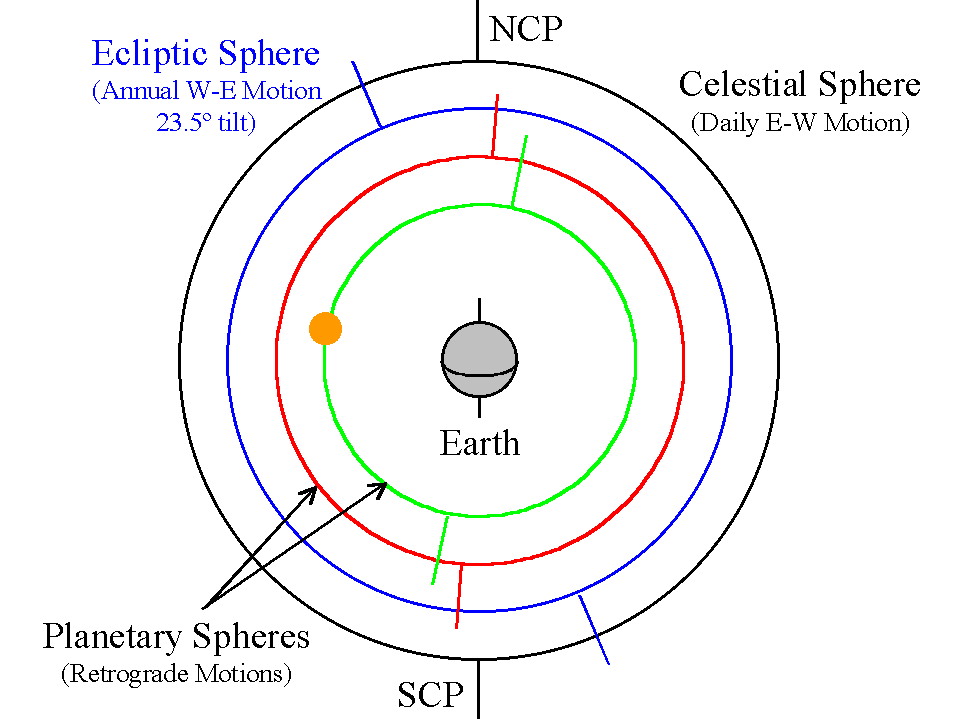
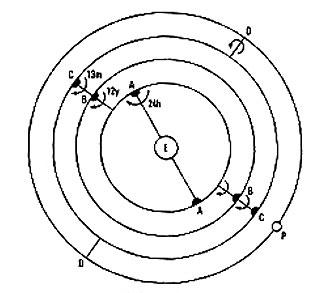
And that is where the history of middle age astronomy begins. Aristotle’s earth-based universe concept wasn’t working and also the sun-based universe concept of Aristarchus wasn’t acceptable. So, scientists fell in a situation like a fish out of water. So they had to modify the model of Eudoxus. So, they made it more critical using more spheres and even wheels. They add more epicycles and eccentrics, but though they failed to make a model which can describe the basic events of the universe around us. Greek astronomer Claudius Ptolemy finalized the correction of this model. He was also wrong like Aristotle. But his model worked better than before. Ptolemy was hard-working but he often hid information in order to keep his model neat and clean. Though his model worked well, it had too many critical errors. Ptolemy accepted Aristotle’s earth-based concept. He showed very simple logic for this concept. He said- if earth moved, people would splash up from here to there.

In that age, people weren’t reasonable yet. They admitted what the philosophers said, without any objection. But people didn’t know that Science and Belief is way too different from each other. Ptolemy’s model was counted as a perfect model to the people as well as the scientists for about 1400 years. This model was the final modified version of Eudoxus’s model which never could describe the critical linear motion of the objects in the solar system. Ptolemy is the first scientist who thought that our planet is like a dot in the scale of universe.
Ptolemy's Model
Heraclitus and Lucretius were two more wises of the similar time of Ptolemy who thought that the sun is equal to a shield in size. But another wise named Anaxagoras said that the sun is way too huge than a shield. Anaxagoras was charged of irreligion and was expelled from his country.
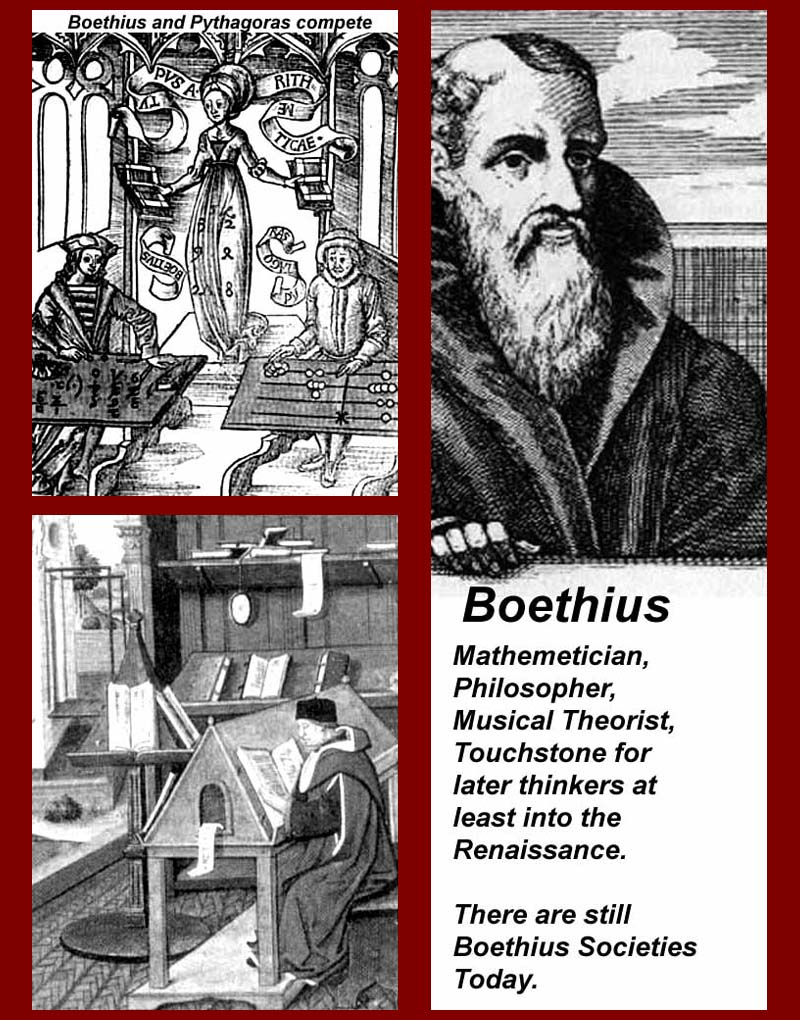
In 5th century AD, religious revolution began and Dark Age of knowledge started. 391 AD, Christian saints burnt the great Seraphim knowledge center in Alexandria. 415 AD, they killed all time great Alexandrian female geometrician, Hypatia. She was killed very crudely in public. In short, the saints sacrificed her in the name of Lord. In 529 AD, emperor Justinian the great shut down Plato’s academy. Rise of the Christianity destroyed knowledge all over the world. Wises of Rome and Alexandria were fled to Brigantine. Religious darkness concealed the west. The last Christian Scientist, who tried to take mankind to the right scientific way, was Ankius Boethius. But also, he was sentenced to death in 524 AD.
640 AD, Muslims conquered Alexandria. They also didn’t have thirst of knowledge. Exultingly they burnt down the great Alexandrian library. In 760 AD, Baghdad became the capital of Islamic empire. After much merriment, some great Muslim minds felt the thirst of knowledge. It seems weird; because feeling thirst for knowledge at that time was indifferent to calling ones death. Whatever, those Muslim wises started rendering the Greek books. In west, Muslim wises took charge of recovering the lost knowledge. They started acquiring old Greek knowledge. But they were harassed by Muslim saints. But they didn’t give up acquiring knowledge. The continued their quest in that situation at that age. Arabian astronomers didn’t do anything special. Even yet, the Ptolemy model was counted as standard. Though, they made illogical and imaginary concept of ‘seven skies’ or ‘ten skies’.
In middle age, all religions played negative role against knowledge. They wanted to establish their ‘beliefs’. And they proved that religion is always opposite to science through their above mentioned acts. The Dark Age lasted from 5th to 15th century AD. It not only ruled over astronomy, but all divisions of knowledge, even literature! Where the history middle age astronomy ends, the history of modern astronomy begins.

Wednesday, August 13, 2014

Astronomy- A Historical Saga: Part 1

The story of the Cosmos we know today, started about 14 billion years ago, with a 'Big Bang'. But the scientific journey in this planet, where we live short, started with the discovery of fire. But we started to reveal the story of Cosmos before 6th century BC, till when, our ancestors thought that, the earth is a flat place, and the sky is a tomb around it which contains the sun and the moon. They not only thought the sky as a tomb or a lid, but also imagined that, the stars are 'dots of lights' and the sun as a fireball and the moon as a lightened divine object. But in 4th century BC, Greeks first tried to get out of this 'bounded' concept of the world. They first said that, those 'dots of lights' are actually planets and stars which are situated a very long distance away. The first model of this 'so-called' Universe was designed by Ptolemy from Egypt. It had many errors but though, it was a very valuable contribution for that time.
In 1600 BC, the Babylonians created a 'star-list' and also started to record the positions of those stars. But as they were priest, they described the universe from their religious view, which was not able to be granted scientifically.
Ancient paradigm about the Universe
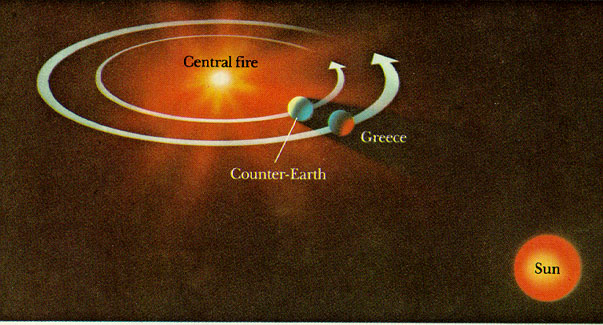
Greek geometrician Pythagoras first attempted to make a more scientifically appreciative model of the universe in 500 BC. He is the first who suggest that, earth is not flat, but round and everything else turns around it. After him, his followers modified his model and made it strange. They put a fire-object in the middle of the model instead of earth. But, that fire-object was not the sun. It was imaginary. They imagined, all the planets and satellites are turning around this fireball including earth and the moon, even the sun! Every object in the model was a sphere. Actually, the model was just a 'set' of spheres, which was made to describe the solar system, yet known that time. The entire model was covered with another larger sphere which indicated the 'edge' of the solar system! They named this sphere as 'the sphere of stars'.
Aristotle comes next in the chain. No doubt that, he was extremely wise, but though he also was the father of much false knowledge. His concept of 'the universe' was more religious than scientific. But though, people at that time admitted his concept as universal truth and the priest also believed and announced this concept as 'the law of the God'! Aristotle modified the model of Eudoxus adding more 28 spheres in it. This model had 55 spheres, a total. This model was also philosophically satisfactory, but scientifically it was still useless. Aristotle classified the world in two areas- one, 'the holy Sky' and two, 'the polluted Earth'. Each area works on a particular principle. He also said that, no force is needed to make the planets transit. And he rather said, behind the last 'sphere' of his model, there is 'nothing', not even 'emptiness'!
This model had more errors than before. But the first person in history, who first suggested the concept of 'solar-centered' universe, was a Greek astronomer named, Aristarcus. He is the first in history who said, "The sun doesn't transit the Earth, but the Earth transits the Sun." Well, the ignorant people of that time rejected his concept. And a legendary astronomer gone lost in time. Even today, maximum scientific minded people do not know him! He was the last and best astronomer before 'the day of the lords'. Though, in the later times, science developed and realized his concept.


Later, this 'Pythagorean universe model' was gone to the hands of Plato, who was a philosopher, but liked geometry. His philosophy was 'Abstract'. So, he took geometry to the religious level. His abstract philosophy polluted astronomy. Another geometrician named Eudoxus, he was asked by Plato to make another earth-centered universe model. This model had to be realistic as well as satisfactory to Plato! It was tough, but though Eudoxus made it. He used 27 spheres for his model. This model was very critical and faulty. This model wasn't also scientifically satisfactory.